
Virtual Assistant vs In-House Assistant for Luxury Real Estate
The useful comparison starts with the work, not the job title. A luxury real estate operation may need someone to update records, prepare listing materials, coordinate calendars, and follow written transaction checklists. It may also need a person to receive a vendor, organize physical materials, or support an event at a property.
A virtual assistant is a practical option when the core workflow is digital and can be managed through defined systems. An in-house assistant is a practical option when daily physical presence is part of the role. Neither structure is automatically better for every agent, brokerage, or property team.
Compare the Operating Models
The table below focuses on how each model works. Actual terms depend on the role, location, employment arrangement, and service agreement, so teams should review their own requirements before deciding.
| Decision factor | Virtual assistant | In-house assistant |
|---|---|---|
| Work location | Remote workspace | Team office or another agreed location |
| Best fit | Digital, repeatable, documented tasks | Work that regularly needs physical presence |
| Communication | Task platform, messages, video, and scheduled calls | In-person discussion plus shared systems |
| Access planning | Permission based access to approved tools | Digital access plus possible office or property access |
| Coverage design | Hours and response windows defined in the agreement | Schedule defined by the employment arrangement |
| Management need | Clear procedures, written briefs, and review points | Clear procedures, direct supervision, and review points |
The location question often narrows the choice quickly. If most support work happens in a CRM, inbox, calendar, document system, or marketing workflow, remote delivery can be considered. If the role includes frequent office reception, property access, or physical inventory, local staffing may be necessary.
Audit the Work Before Choosing
Start with two weeks of task observation. Record each support task, the system used, the person who requests it, the expected completion window, and whether anyone must be physically present. This produces a grounded scope instead of a broad list such as “help with administration.”
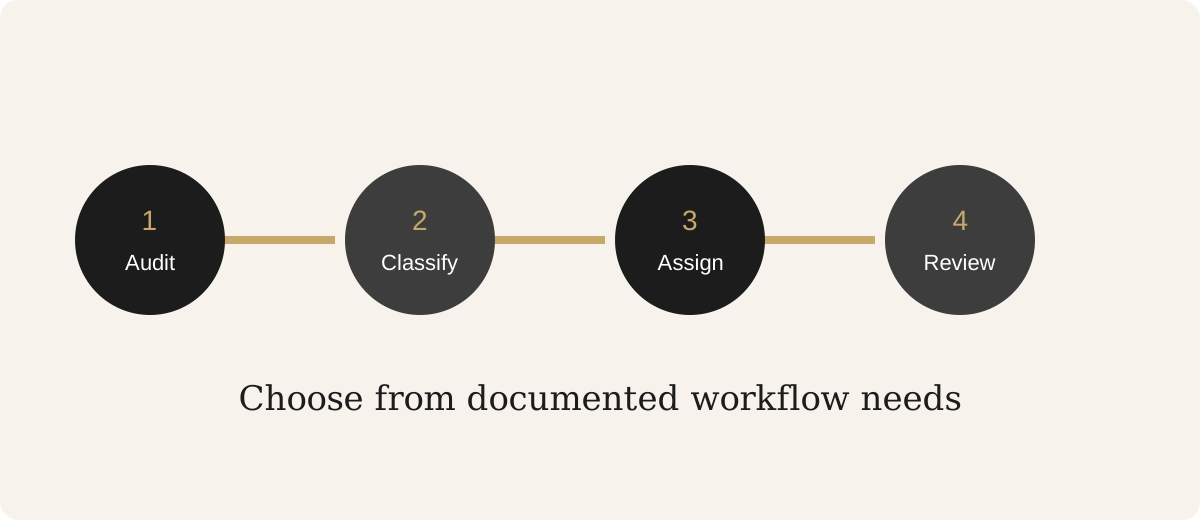
Sort the task list into three groups:
- Remote ready: CRM hygiene, calendar coordination, document preparation, status reporting, and approved marketing production.
- Location dependent: Office reception, physical key handling, property visits, and on-site vendor access.
- Licensed or restricted: Work that may require a license, specific supervision, or limited data access under local rules and company policy.
The third group deserves separate review. Delegation does not change legal, brokerage, or privacy obligations. Confirm the permitted scope with the appropriate broker, counsel, or compliance lead before granting access.
Build Oversight Into Either Choice
A support model works better when ownership is visible. Define where requests enter the system, who sets priority, what “done” means, and when an item must return to the agent for judgment. These rules matter for remote and in-house staff alike.
Use a short weekly review to inspect completed work, open items, and recurring blockers. Keep procedure changes in one shared location rather than distributing them through private messages. Access should follow the minimum needed for the assigned task, with accounts removed promptly when responsibilities change.
A simple scorecard can help the team compare a trial or onboarding period. Review accuracy, timeliness, escalation judgment, communication clarity, and procedure adherence. Avoid measuring activity alone because a full task queue does not show whether the right outcomes were delivered.
The Real Estate Luxury Short Answer
Choose an in-house assistant when reliable physical presence is central to the support role. Choose a virtual assistant when the work is primarily digital, documentable, and suitable for remote delivery. Consider a hybrid model when the operation has meaningful needs in both groups.
The next step is a scoped conversation rather than a generic staffing recommendation. Contact Real Estate Luxury to discuss the workflows you want to delegate and the access, coverage, and review structure they require.
Frequently Asked Questions
Can a virtual assistant replace every in-house assistant task?
No. Tasks that require a person at a property or office still need local coverage. A virtual assistant can own suitable digital workflows when access and accountability are clearly defined.
Which model gives a luxury real estate agent more direct oversight?
Both models can support direct oversight, but the methods differ. In-house work allows face to face check-ins, while remote work relies on written procedures, task systems, and scheduled reviews.
Can a team combine virtual and in-house support?
Yes. A hybrid structure can keep physical duties local while assigning repeatable digital work to remote support. The team should define ownership carefully so requests do not fall between roles.